

High Frequency Industry Standards
MHF® series is compatible with major communication standards, such as 5G mmWave & Sub6, 4G, LTE, Wi-Fi, Bluetooth, GPS, WiGig, cellular M2M, IoT, SigFox, WiSUN, NB-IoT and LoRa.
Wi-Fi 7, Wi-Fi 6E
Wi-Fi 7 extends the capabilities of Wi-Fi 6E by integrating the 6 GHz band, which spans from 5.925 to 7.125 GHz, to facilitate higher data transfer speeds and increased capacity. This advancement enhances stability when multiple devices are connected simultaneously and contributes to energy efficiency. The MHF® I and MHF® 4L connectors are designed to accommodate frequencies of up to 9 GHz and 12 GHz respectively.
M.2 Standard
MHF® 4 and MHF® 4L are industry-standard M.2 connectors explicitly designed for high-frequency radio frequency (RF) modules commonly utilized in various applications. These connectors ensure reliable connectivity in devices such as notebook personal computers (NBPCs) and cellular machine-to-machine (M2M) communication radio modules. By adhering to the M.2 standard, MHF® 4 and MHF® 4L provide a compact and efficient solution for integrating RF modules, enabling seamless wireless communication across a wide range of consumer electronics, industrial IoT devices, and mobile applications. Their design ensures optimal performance where space and signal integrity are critical.
5G and Future Standards
MHF® 7S offers advanced solutions for 5G mm Wave up to 15 GHz typically IF bands used for communication between antenna and modem SoC. The complexity of larger devices necessitates using longer-length harnesses to connect antennas to RFICs. Devices include Notebook PCs (NBPC), Small Cells, and Customer Premises Equipment (CPE). MHF® 7S effectively addresses numerous distinctive challenges associated with 5G devices. I-PEX is at the forefront of enabling innovation in the 5G landscape.
MHF® Series connectors can support industry standard frequency bands from DC to 15 GHz enabling high speed wireless systems. Multiple MHF® connectors can be used to successfully implement MIMO (Multiple Input, Multiple Output) systems that use multiple transmitting and receiving antennas to increase the capacity of wireless links providing benefits like increased capacity, higher data rates and better spectral efficiency enabling gigabit class connections. With ultra small size, mechanical locking and full EMI shielding, these connectors address unique challenges in implementation of MIMO functions in compact, portable 5G systems like limited space, isolation and coupling and signal interference. High speed wireless systems using MHF® series antenna connectors offer various system level advantages like improved link budget and range, higher data throughput, enhanced signal integrity, reliable MIMO and beam forming performance etc.

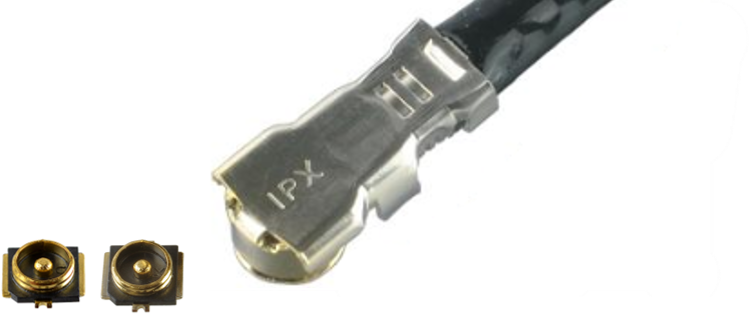
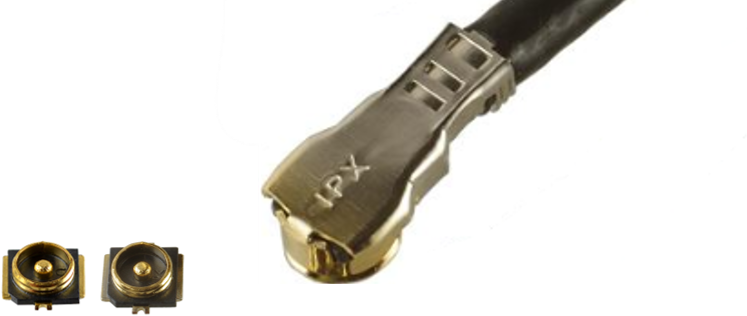
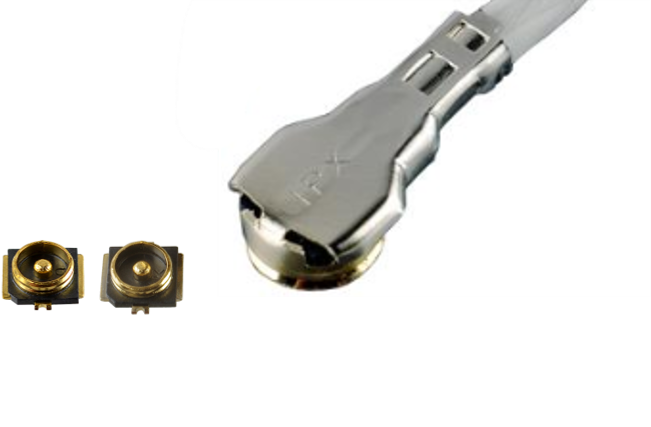
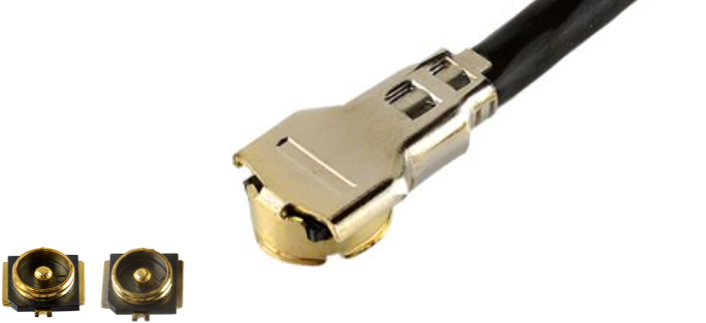
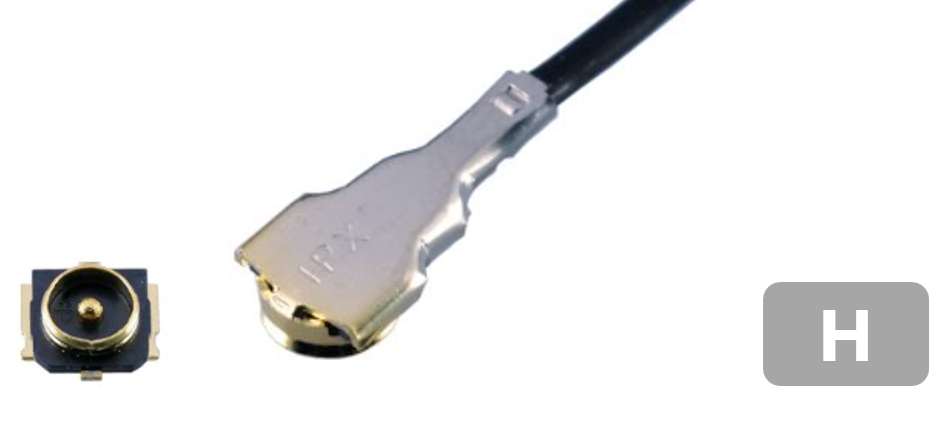
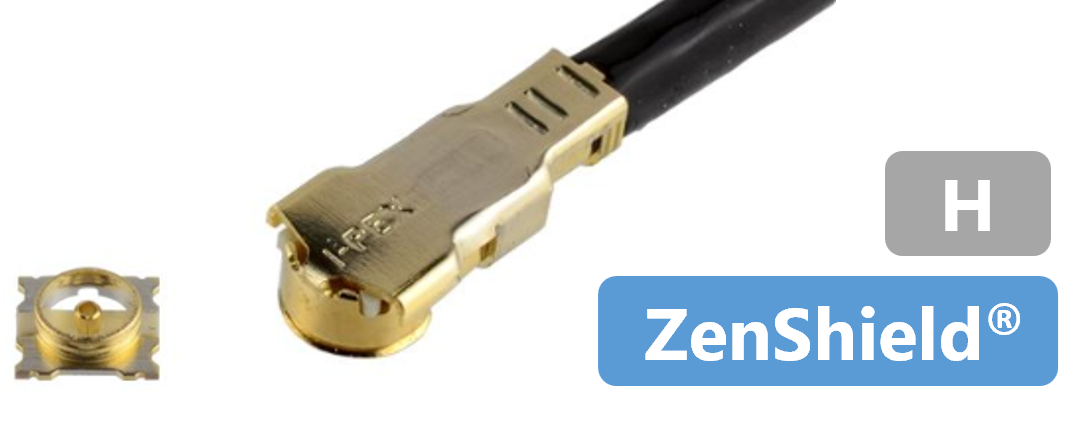
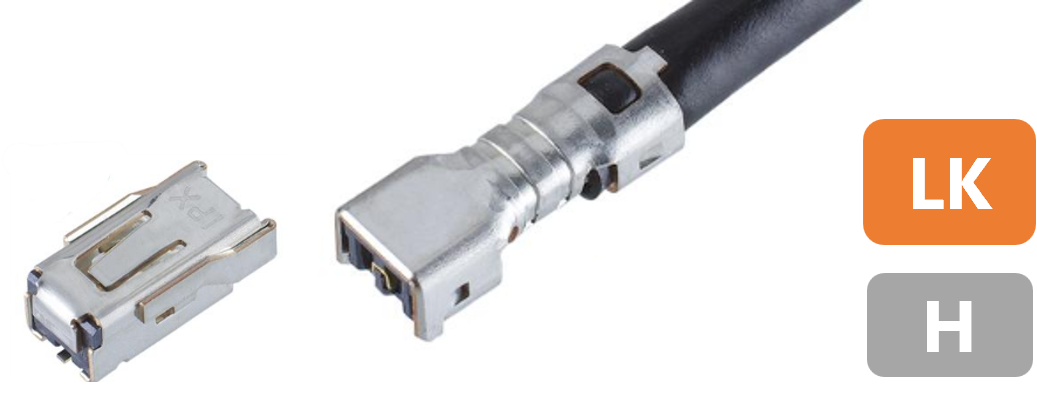
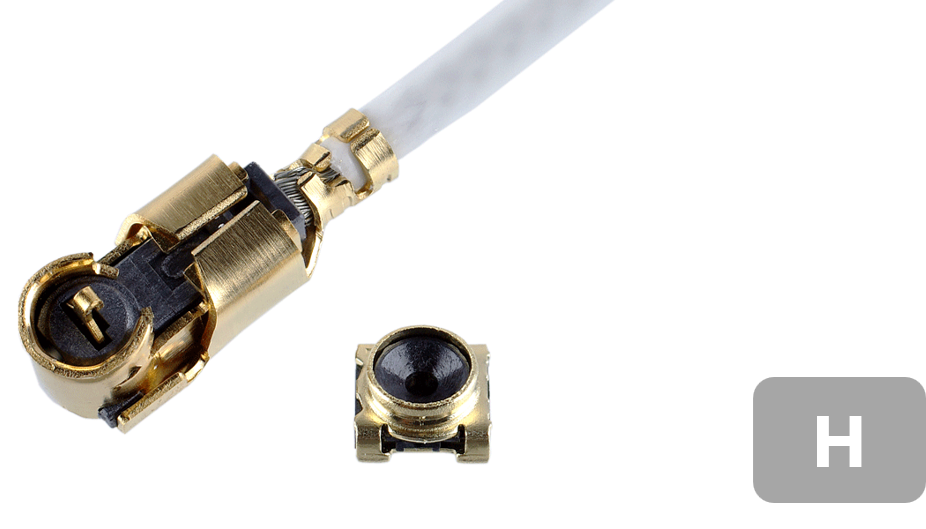
Product Name |
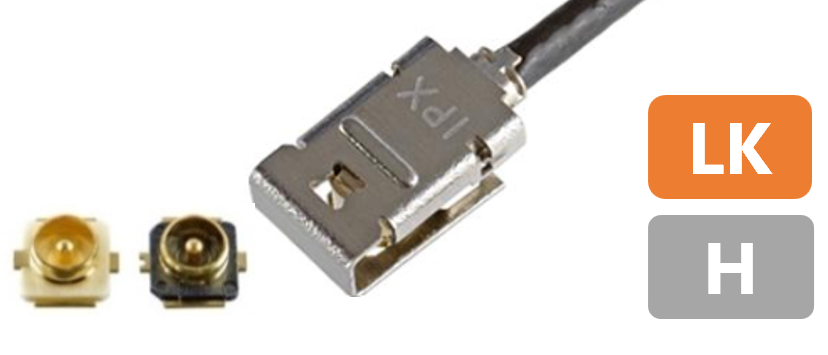
MHF® I LK |
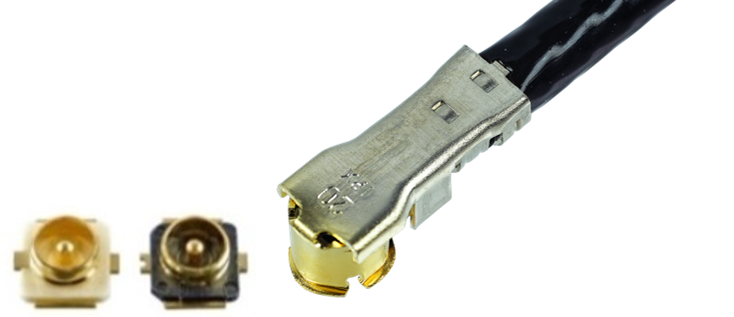
MHF® I |
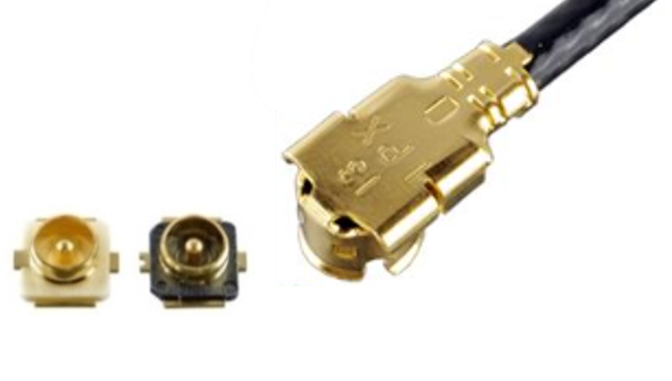
MHF® 4L LK |
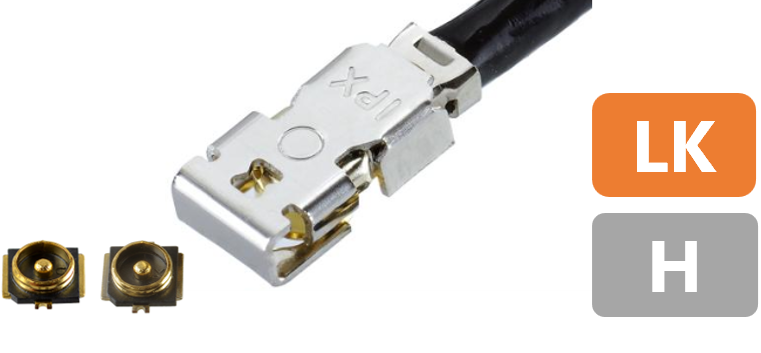
MHF® 4L |
MHF® 4 | ||||
Appearance |
|
|
|
|
|
|
|
|
|
Feature |
MHF® I with Mechanical lock |
Low Insertion Loss |
Industry standard Most cable options |
MHF® 4L with Mechanical lock |
Low Insertion Loss and VSWR |
Industry Standard for M.2 |
Industry Standard for M.2 |
Low profile 1.2 mm |
|
Frequency Range |
Up to 9 GHz |
Up to 9 GHz |
Up to 9 GHz |
Up to12 GHz
|
Up to12 GHz (MHF® 4L receptacle)
|
Up to12 GHz (MHF® 4L receptacle)
|
Up to12 GHz (MHF® 4L receptacle) Up to9 GHz (MHF® 4 receptacle) |
Up to 9 GHz |
|
VSWR
|
DC to 3 GHz |
1.3 max. |
1.3 max. |
1.3 max. |
1.3 max. |
1.3 max. |
1.3 max. |
1.3 max. |
1.3 max. |
3 to 6 GHz |
1.5 max. |
1.5 max. |
1.5 max. |
1.4 max. |
1.4 max. |
1.45 max. |
1.45 max. |
1.5 max. |
|
6 to 9 GHz |
1.6 max.
|
1.6 max. |
1.6 max. (O.D.1.32 mm) 1.9 max. (O.D.0.81, 1.13, 1.37, 1.8 mm) |
1.5 max. |
1.5 max. |
1.6 max. |
1.6 max. |
2.0 max. |
|
9 to 12 GHz |
- |
- |
- |
1.6 max. |
1.6 max. |
1.9 max. |
1.9 max. |
- |
|
Product Name |
MHF® 5L |
MHF® 5 |
MHF® 7S |
MHF®-TI | MHF®-SW23 plug | |||
Appearance |
|
|
|
|
|
|
|
|
Feature |
Low insertion Loss and VSWR through 15 GHz |
Low Insertion Loss and VSWR through 15 GHz |
Low profile 1.0 mm |
Low profile 1.0 mm |
Excellent EMC performance with fully-shielded design |
Robust design for automotive telematics antenna and camera sensors |
Mating with switch connector (20549-001E) |
|
Frequency Range |
Up to 15 GHz |
Up to 15 GHz |
Up to 12 GHz |
Up to 12 GHz |
Up to 15 GHz |
Up to 6 GHz |
Up to 9 GHz |
|
VSWR
|
DC to 3 GHz |
1.3 max. |
1.3 max. |
1.3 max. |
1.3 max. |
1.3 max. |
1.5 max. |
- |
0.3 to 3 GHz |
- | - | - | - | - | - |
1.4 max. |
|
3 to 6 GHz |
1.4 max. |
1.4 max. |
1.5 max. |
1.5 max. |
1.35 max. |
1.5 max. |
1.6 max. |
|
6 to 9 GHz |
1.5 max. |
1.5 max. |
1.6 max. |
1.6 max. |
1.4 max. |
- |
2.0 max. |
|
9 to 12 GHz |
1.5 max. |
1.5 max. |
1.8 max.
|
1.6 max. |
1.45 max. |
- |
- |
|
12 to 15 GHz |
1.6 max. |
1.6 max. |
- |
- |
1.5 max. |
- |
- |
|
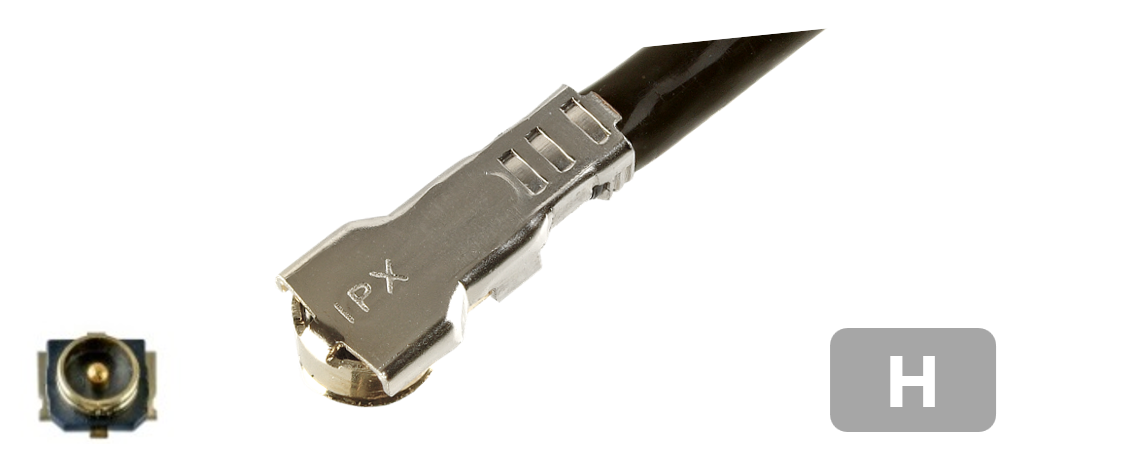
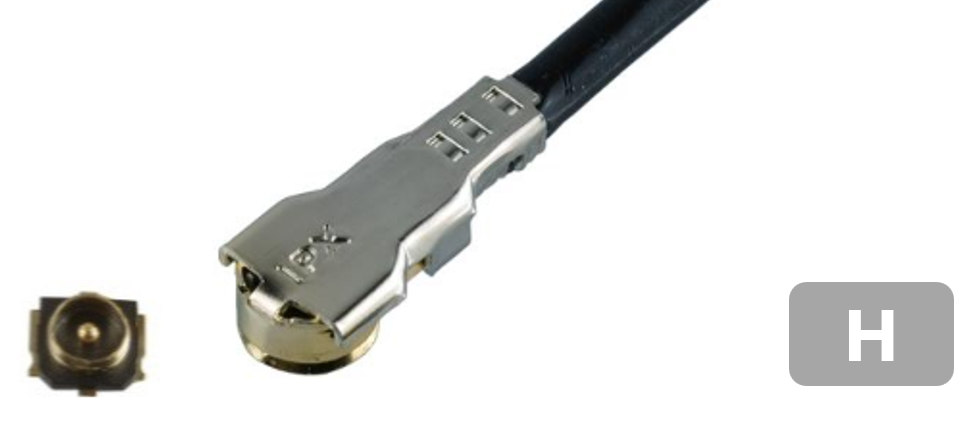
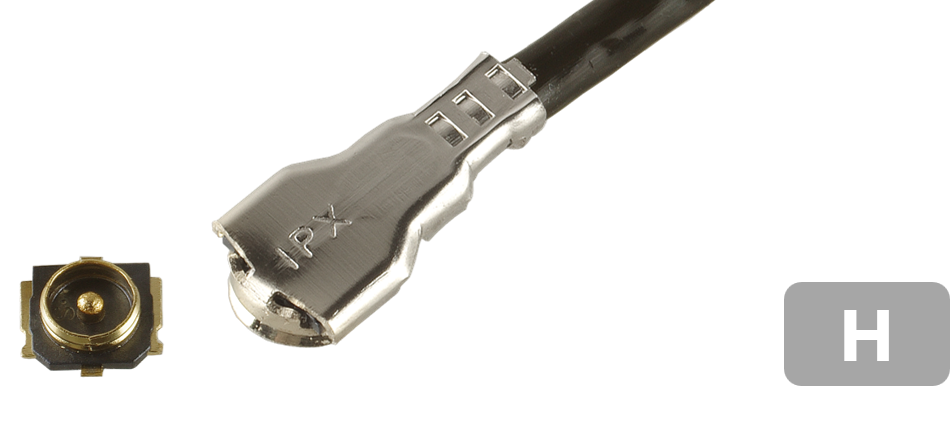
Insertion Loss and VSWR are some of the key signal integrity parameters that play a critical role in signal integrity and high data rates of wireless systems using MHF® connectors. Unique design of MHF® connectors ensures very low Insertion Loss and VSWR for both the Harness Assembly and Connector all across the frequency spectrum of DC to 15 GHz. Figure 1 below shows the variation in Insertion Loss of 100 mm long MHF® 7S Harness Assemblies using 1.13 mm coaxial cables across the frequency range of DC to 15 GHz.
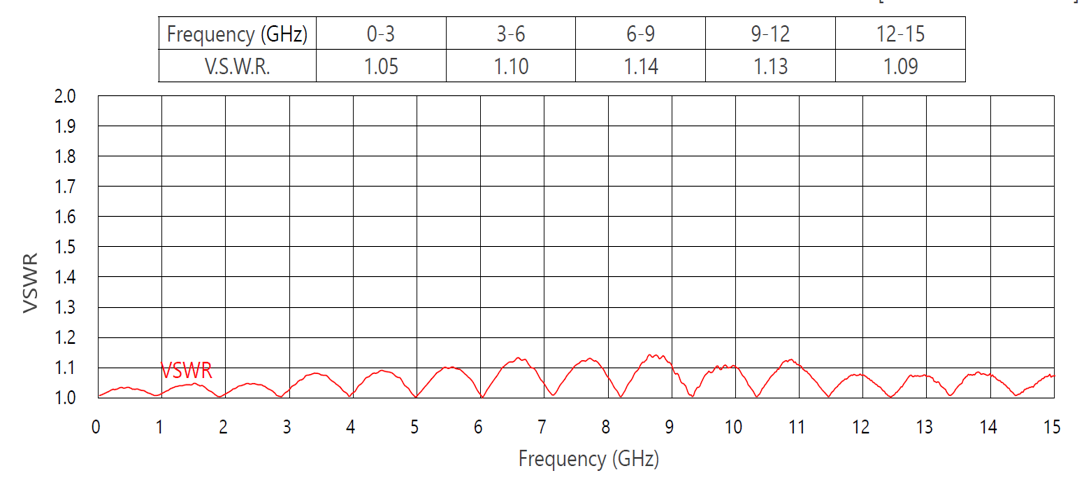
Similarly, the VSWR of MHF® Harness Assemblies stays very low and fairly close to 1 across the complete operating frequency range of DC to 15 GHz as shown in the Figure 2. Low VSWR indicates excellent impedance matching between connectors and coaxial cables, resulting in better signal integrity with minimal signal reflections and distortion at high frequencies.
Features and Benefits of I-PEX RF Solutions
- 1. High Frequency Industry Standards
- 2. Connector Size
- 3. Cable Sizes and Harness Configurations
- 4. Cable Insertion Loss
- 5. Minimum Cable Bend Radius
- 6. Robust Design with Integrated Locking Features
- 7. ZenShield® - 360 Degrees EMI Shielding
- 8. MHF® Switch Products for Antenna Testing
- 9. Accessories
- 10. PCB Stack Up Optimization Services
- 11. Signal Integrity Data
- 12. Signal Integrity Testing


