

Cable Insertion Loss
The antenna system’s effectiveness depends on how efficiently power is transferred between the radio circuitry and the antenna element. If the coaxial interconnect has high insertion loss, a significant portion of the transmitted power is dissipated as heat in the cable instead of being radiated by the antenna. Similarly, during reception, part of the weak incoming RF signal is lost before reaching the receiver front-end, reducing sensitivity and SNR.
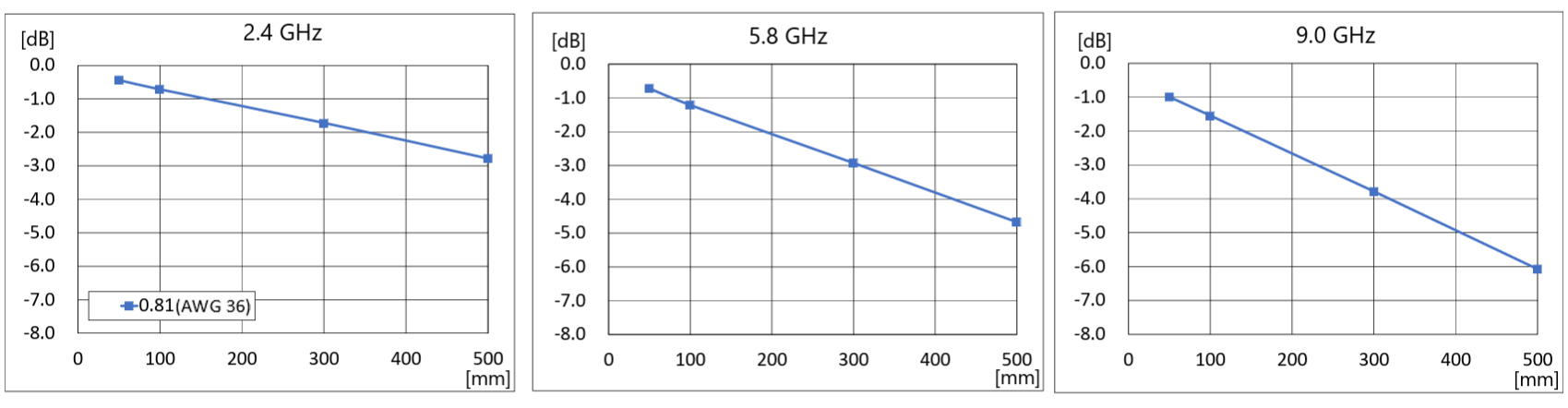
Insertion Loss can be simply put as the amount of high frequency signal lost as heat in coaxial medium from transmitting to the receiving side. A thinner center conductor results in higher Insertion loss, similarly a longer coaxial cable also results in higher insertion loss. Insertion losses in coaxial cables are also increased with the increase in the overall cable length. Insertion Loss also increases with the higher frequencies while keeping the size of center conductor the same, due to Skin Effect. Skin effect is a phenomenon where most of high frequency AC signals crowd towards the surface of conducting material and effective cross sectional area of center conductor is reduced, thereby increasing the signal losses. Typical insertion loss values associated with coaxial harness length are detailed below:
MHF® I cable insertion loss
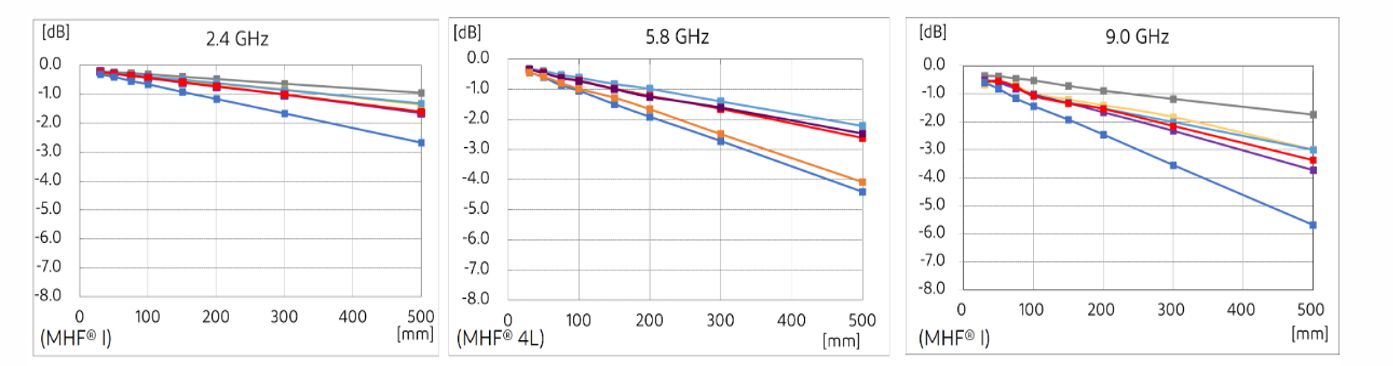
MHF® 4 cable insertion loss
MHF® 4L cable insertion loss
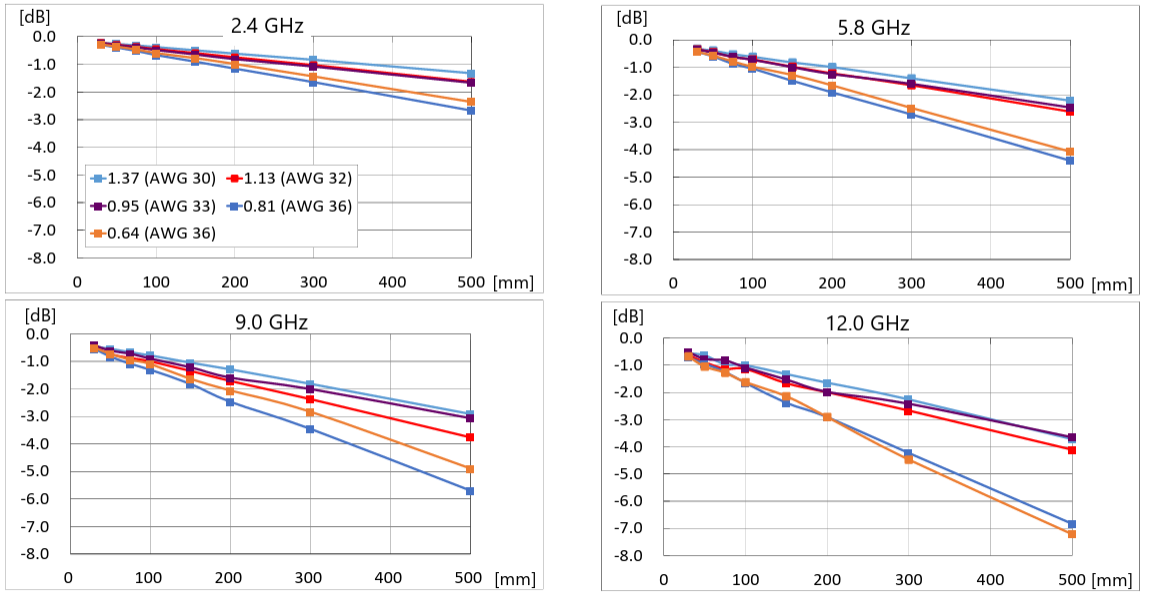
MHF® 5 cable insertion loss
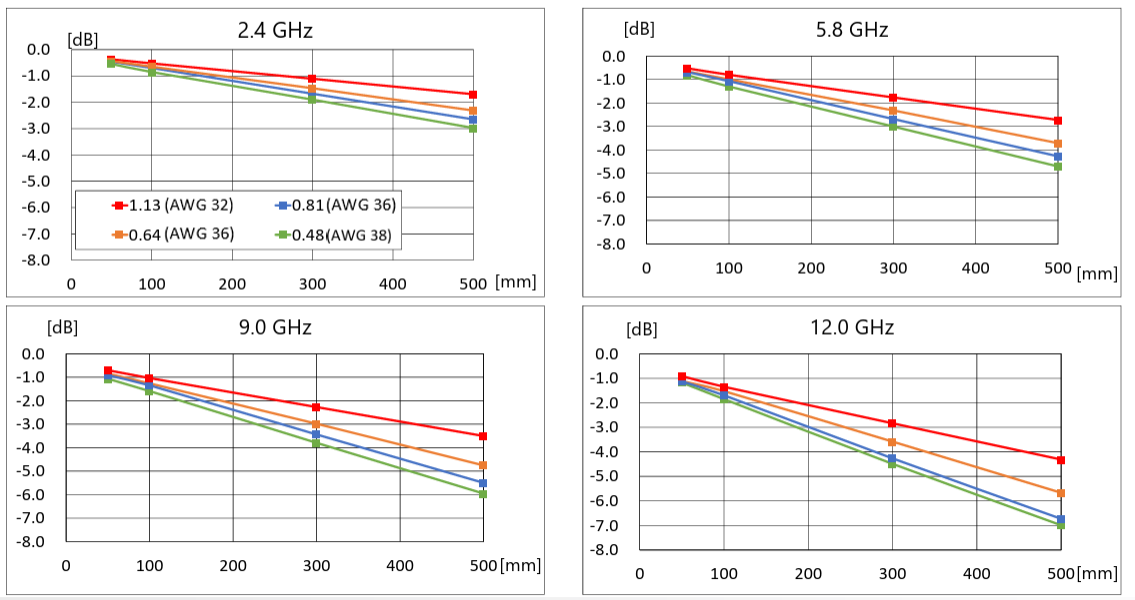
MHF® 5L cable insertion loss
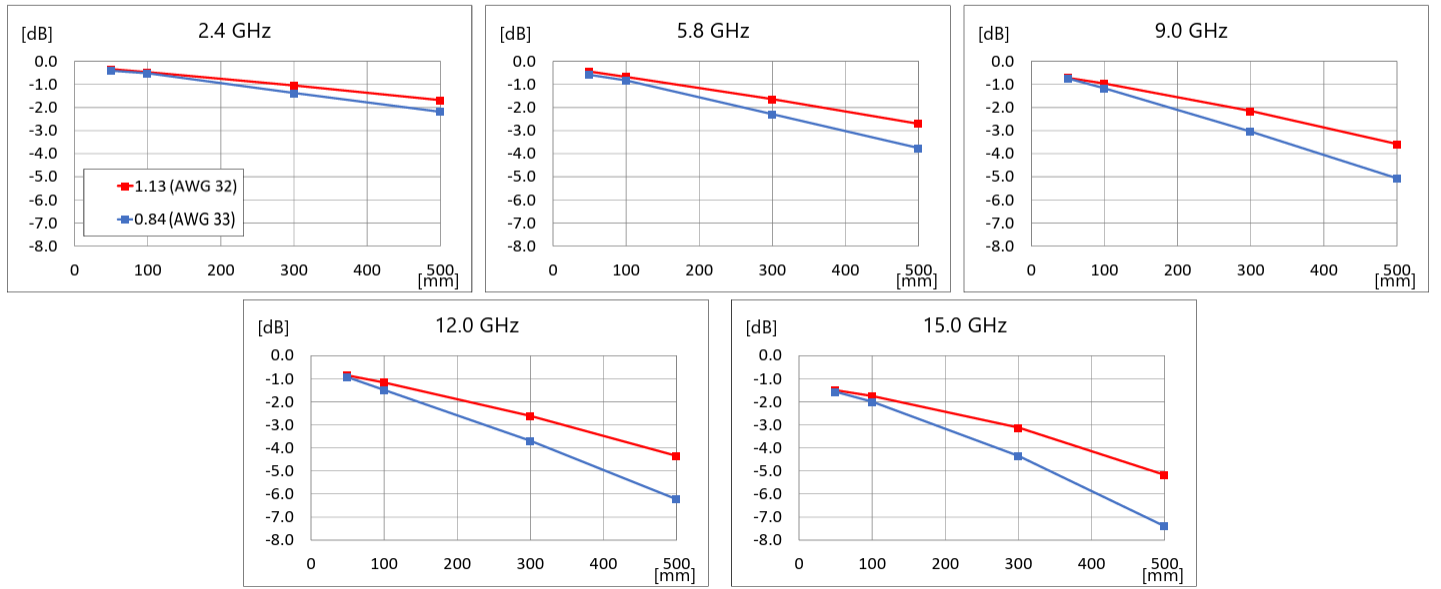
MHF® 7S cable insertion loss
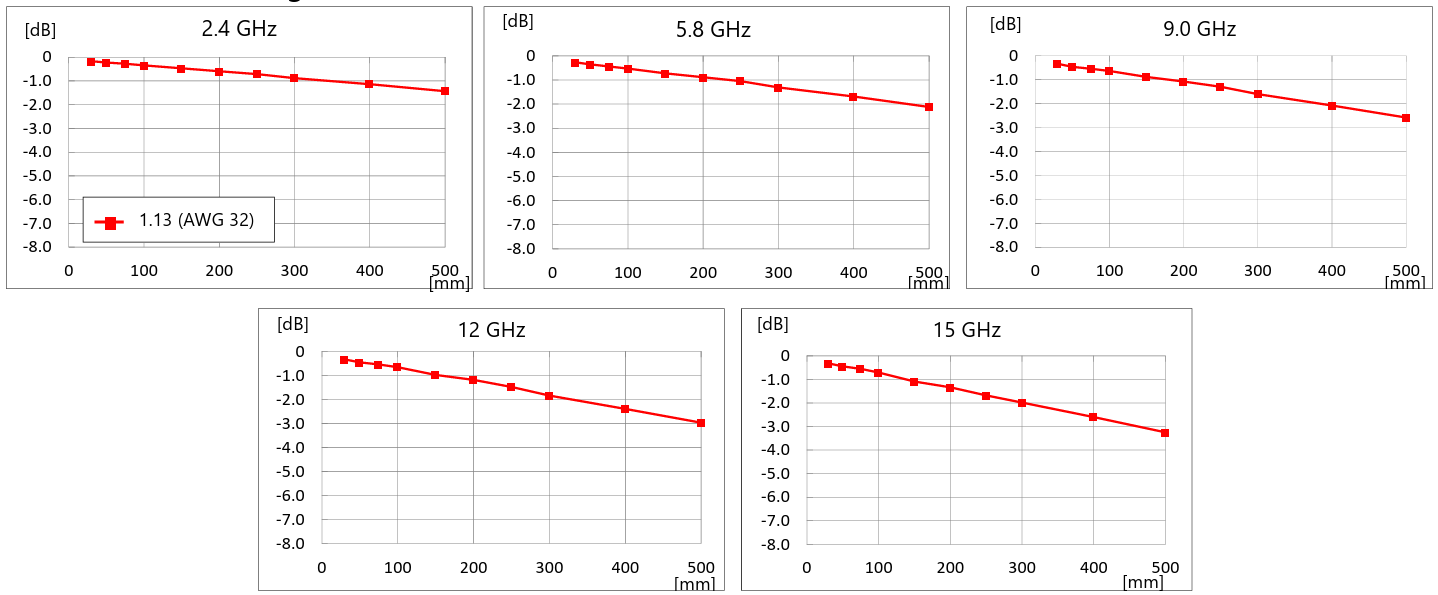
MHF®-SW23 cable insertion loss
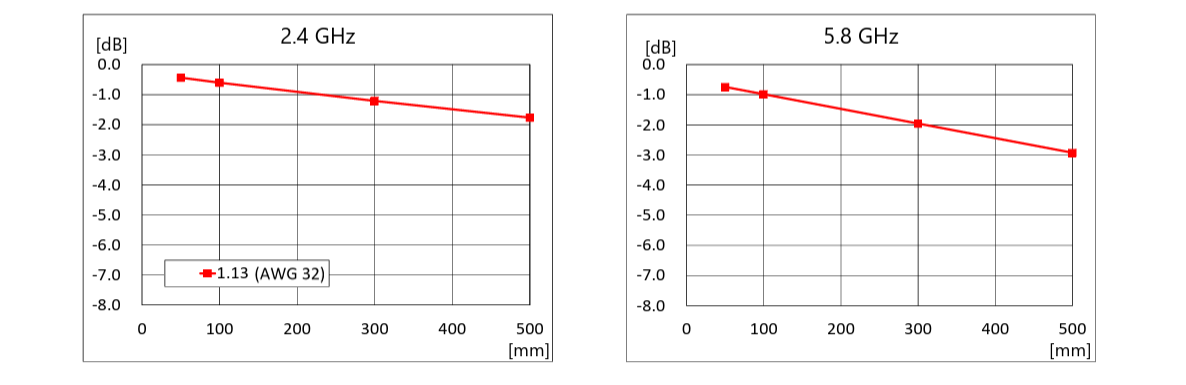
MHF®-TI cable insertion loss
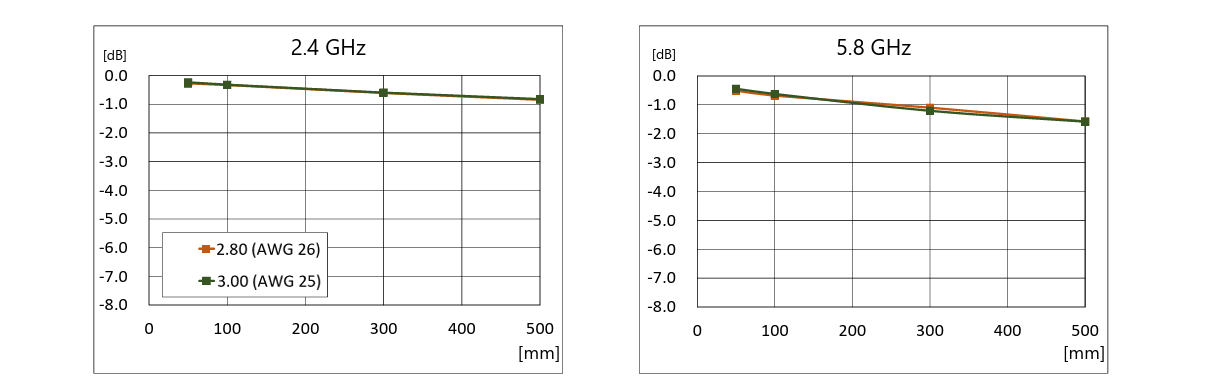
Features and Benefits of I-PEX RF Solutions
- 1. Key Industry Standards
- 2. Connector Size
- 3. Cable Sizes and Harness Configurations
- 4. Cable Insertion Loss
- 5. Minimum Cable Bend Radius
- 6. Robust Design with Integrated Locking Features
- 7. ZenShield® - 360 Degrees EMI Shielding
- 8. MHF® Switch Products for Antenna Testing
- 9. Accessories
- 10. PCB Stack Up Optimization Services
- 11. Signal Integrity Data
- 12. Signal Integrity Testing


