

Offers High Design Flexibility with Various Sizes and Multiple Cable Options?
The antenna system’s effectiveness depends on how efficiently power is transferred between the radio circuitry and the antenna element. If the coaxial interconnect has high insertion loss, a significant portion of the transmitted power is dissipated as heat in the cable instead of being radiated by the antenna. Similarly, during reception, part of the weak incoming RF signal is lost before reaching the receiver front-end, reducing sensitivity and SNR.
I-PEX provides a diverse range of cable diameter options designed to meet specific requirements for insertion loss and minimum bend radius. This variety ensures flexibility in designing connectivity within wireless devices. Depending on the type of MHF connector, the outer diameters of coaxial cables vary from 0.48 mm (MHF® 5) to 3.0 mm (MHF®-TI). At the same time, the designers can also select a suitable size of coaxial cable based on the required minimum bend radius of cable in application. Specified minimum bend radius determines the flexibility of harness and plays a key role in optimal routing of cables in the design.
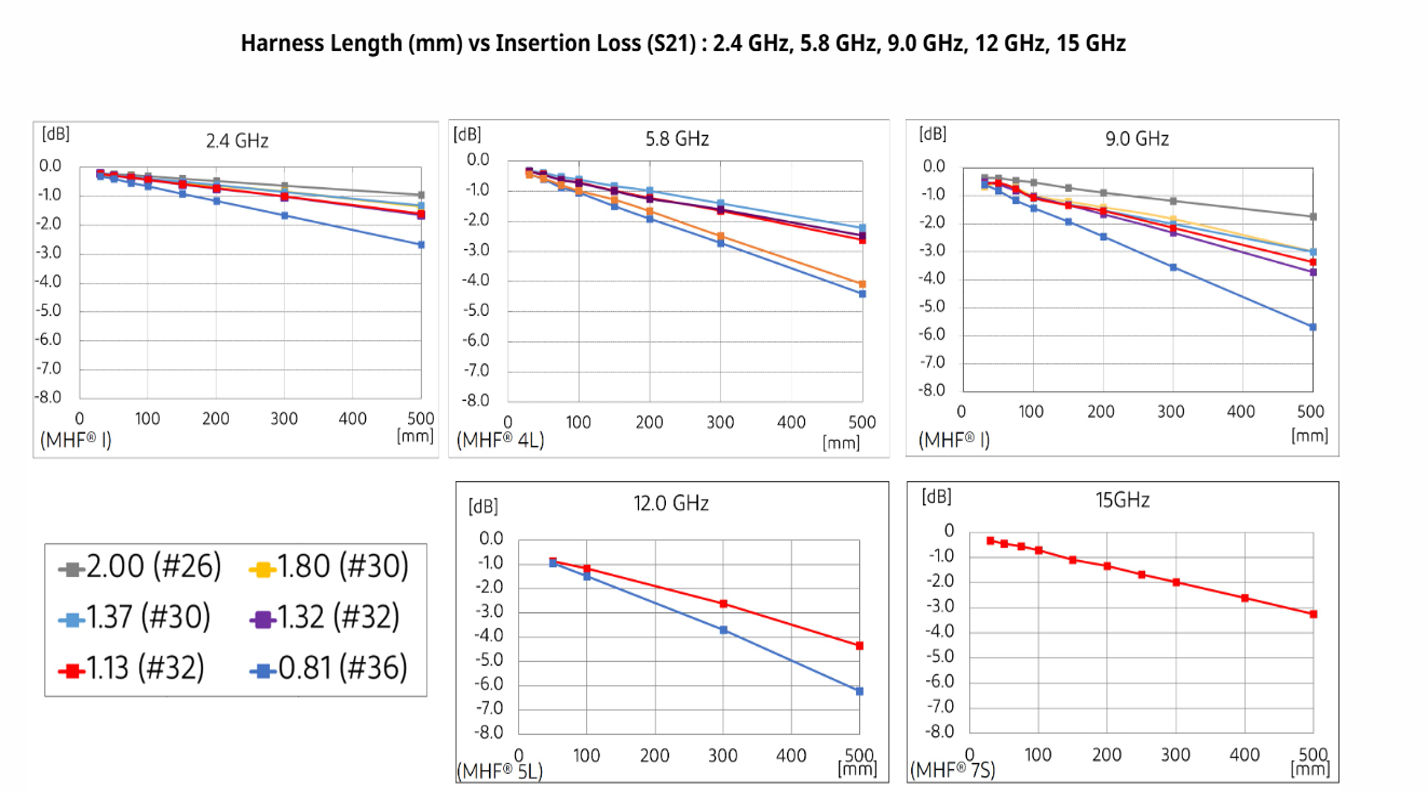
Insertion Loss can be simply put as the amount of high frequency signal lost as heat in coaxial medium from transmitting to the receiving side. A thinner center conductor results in higher Insertion loss, similarly a longer coaxial cable also results in higher insertion loss. Insertion losses in coaxial cables are also increased with the increase in the overall cable length. Insertion Loss also increases with the higher frequencies while keeping the size of center conductor the same, due to Skin Effect. Skin effect is a phenomenon where most of high frequency AC signals crowd towards the surface of conducting material and effective cross sectional area of center conductor is reduced, thereby increasing the signal losses. Typical insertion loss values associated with coaxial harness length are detailed below:
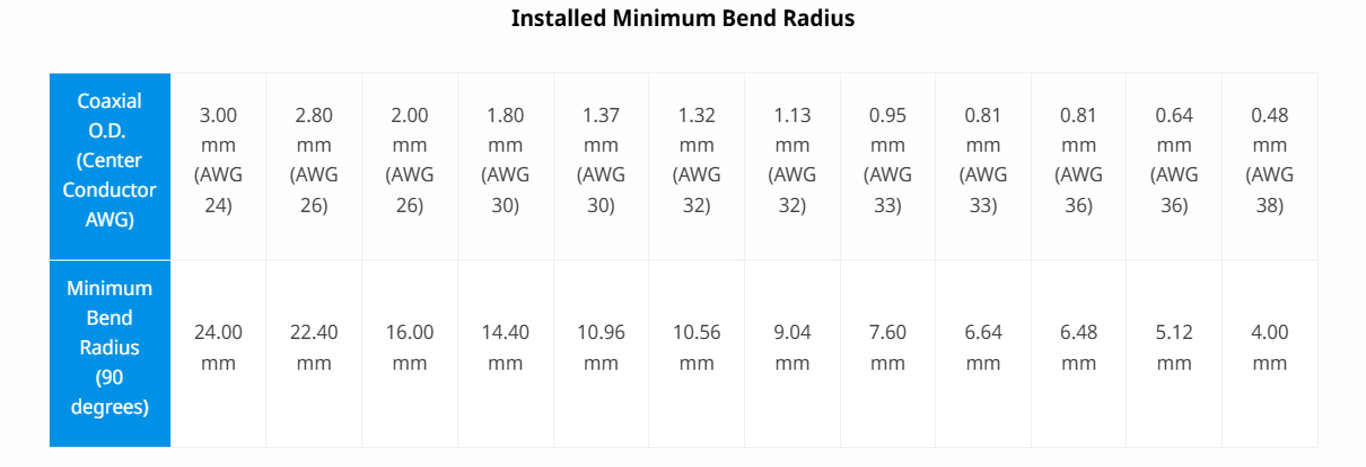
Micro-coaxial cables are specified for Minimum Bend Radius, a parameter that determines how tightly these cables can be bent repeatedly with out being damaged and still ensuring high signal integrity. Minimum bend radius is typically measured in millimeters and are shown below for different sizes of coaxial cables used in MHF series connectors.
What is a RF Connector?
- 1. Compact Size and High Density of MHF Connectors for Portable Systems?
- 2. High Frequency and Data Rates for Modern High Speed Designs?
- 3. Superior EMC Performance with Integrated 360 degrees EMI ZenShielding?
- 4. Offers High Design Flexibility with Various Sizes and Multiple Cable Options?
- 5. Robust Design with Integrated Locking Features?
- 6. Key Industry Standards Supported?
- 7. Consistent Performance with i-Fit® Technology?
- 8. MHF Switch Products for Antenna Testing?
- 9. Available Accessories for MHF Connectors?
- 10. PCB Stack Up Optimization Services?


